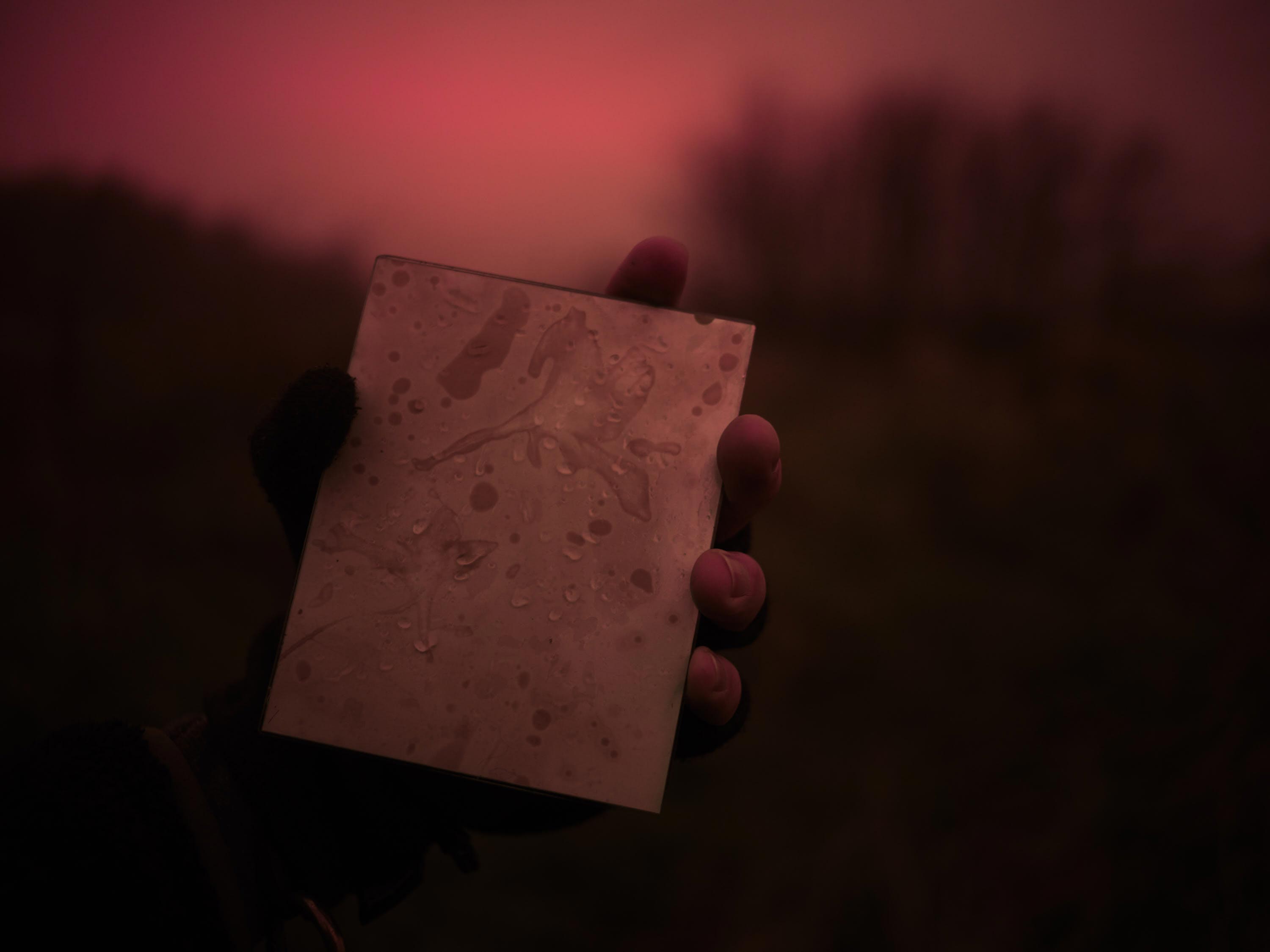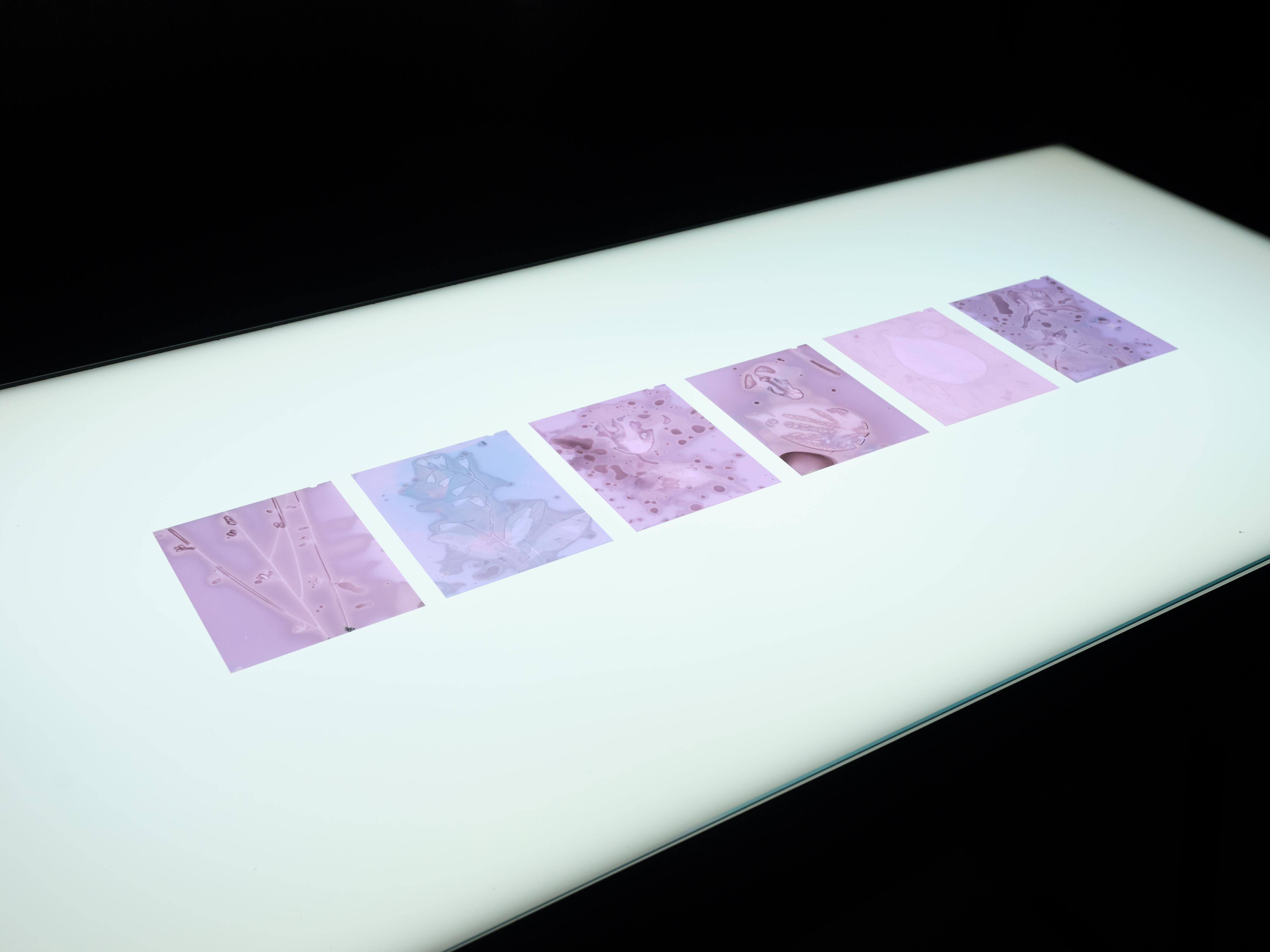
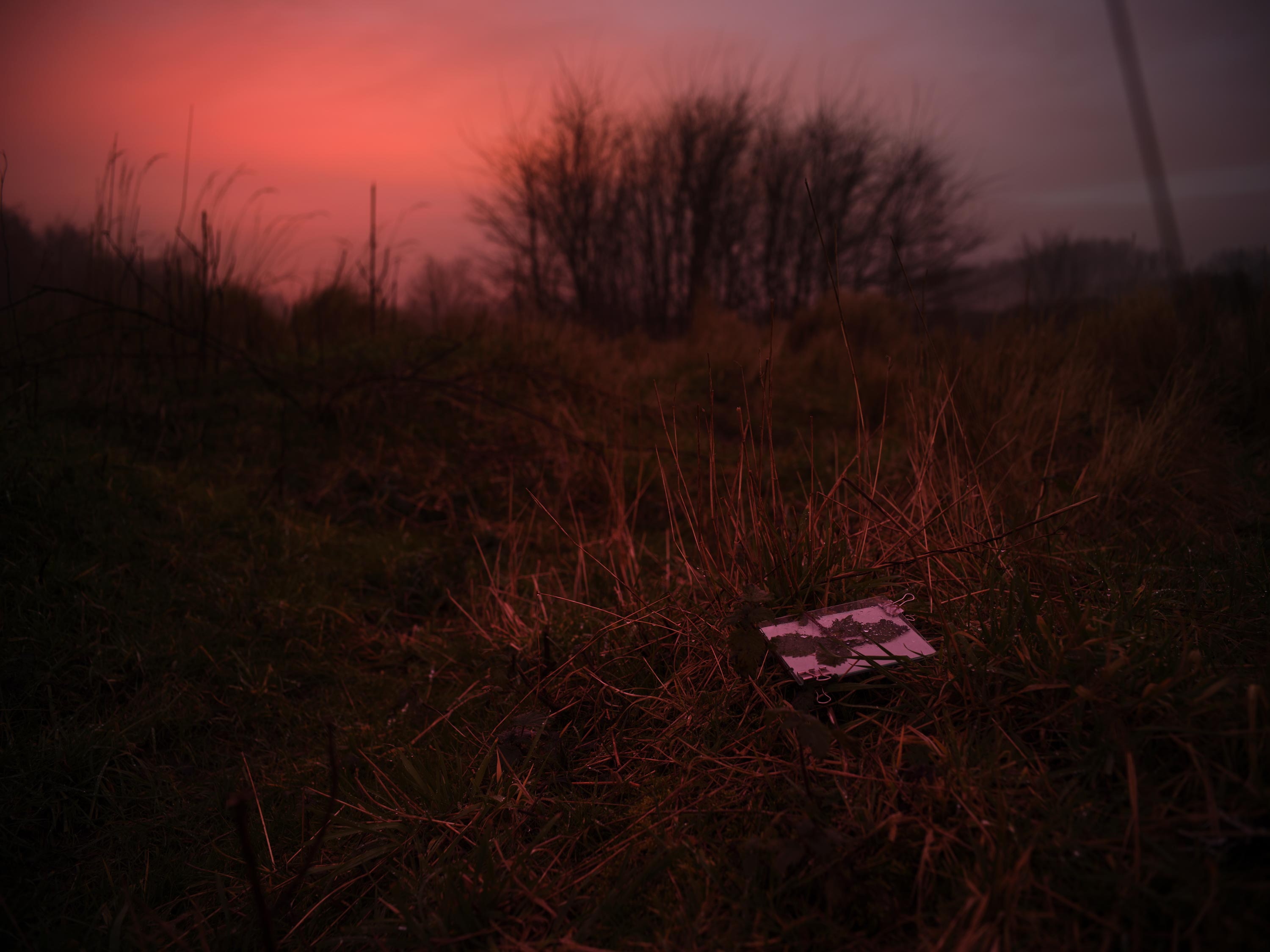
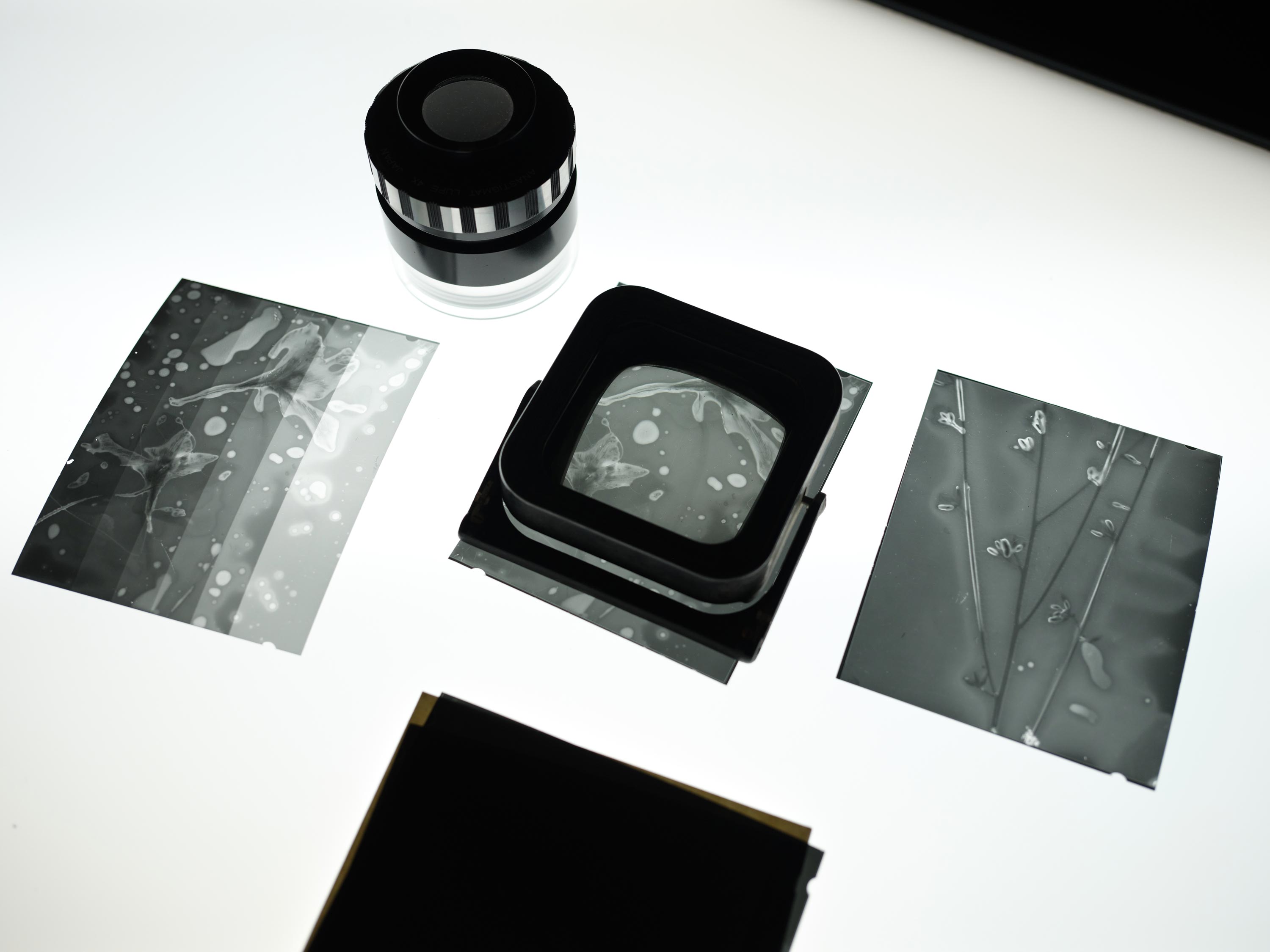
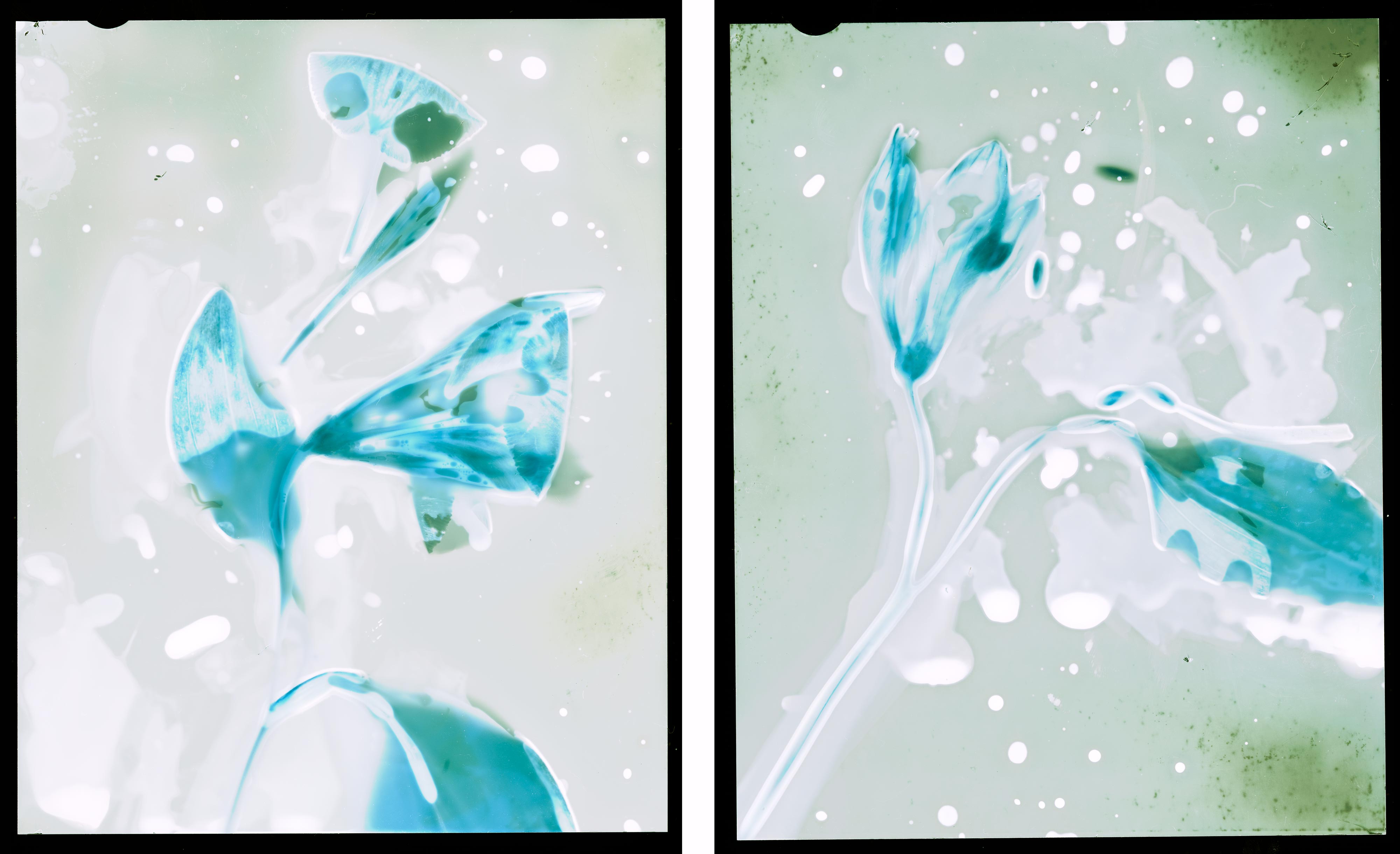
KASSENLICHT is an experimental photographic research project that uses the phytogram: a cameraless, plant-based light-sensitive process in which the internal chemistry of plants and the influence of light together generate images. Without lens or camera, exposure and development occur simultaneously, allowing photography to emerge through direct contact between plant matter, light, and photosensitive material.
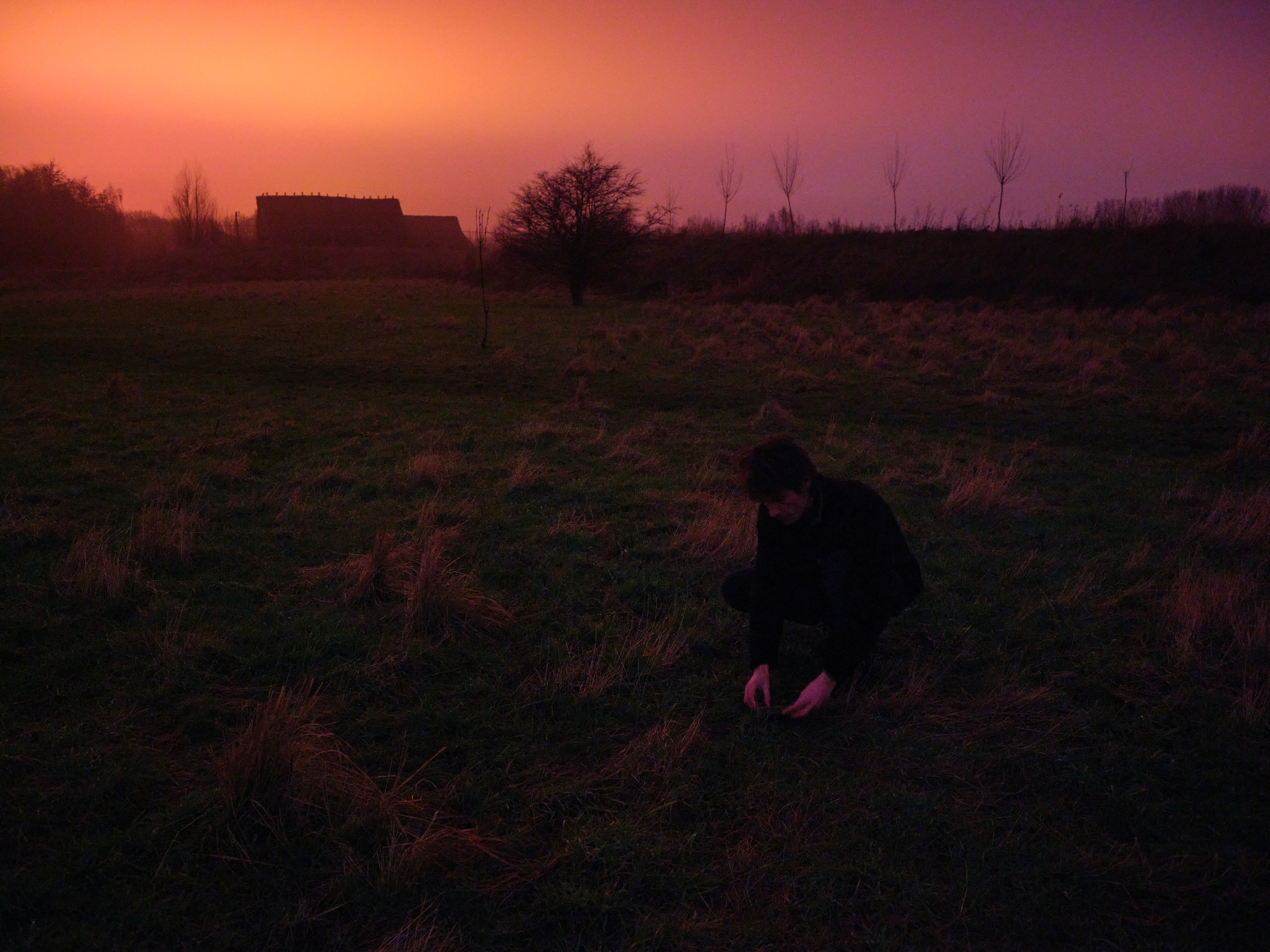
This process is deployed to investigate the impact of artificial greenhouse light emissions on the nocturnal landscape bordering the largest concentration of greenhouses in the Netherlands. At night, the intense glow of the greenhouses transforms the surrounding environment into what can be understood as an open-air darkroom. Within this altered ecology, plants become both witnesses and active agents in the making of the image.
The resulting phytograms are further translated in the traditional darkroom into enlargements, interpositives, and experimental prints. In more recent stages of the project, ecological alternative chemistry is used to minimally fix the images, allowing them to remain light-sensitive and continue transforming over time. In this way, the prints mirror the unstable and continuously changing condition of the landscape itself.
Referencing the history of botanical archives and herbariums, KASSENLICHT reimagines these forms as both cultural artefacts and ecological testimonies. Rather than representing plants as passive subjects, the project positions them as collaborators in a photographic process that records environmental transformation.